



Cart
Loyalty program
First time here? Join X-Bar and our loyalty program before placing your order — create your account now and unlock exclusive promo codes!
Flavour is often what decides whether a switch to vaping succeeds. A poorly chosen liquid becomes tiresome within days, while a well-matched one is easy to use every day. That choice does not depend on your food preferences alone: the composition of the base, the nicotine strength and the hardware you use all shape the final result.
This guide explains how flavour is built into an e-liquid, what the main flavour families are, and how to match your choice to your pod and your nicotine needs. Nicotine is addictive. Vaping products are for adults only, and people who do not smoke should not start vaping.
An e-liquid is built on three elements: the flavourings, the base made of propylene glycol and vegetable glycerine, and, in nicotine-containing versions, the nicotine itself. The flavourings define the profile you perceive, the base carries them to your taste buds, and the nicotine adds a throat sensation. Change any one of the three and the result in the mouth changes with it.
Propylene glycol, or PG, is a thin liquid. It moves easily through small coils and carries flavour molecules well. A PG-rich liquid therefore delivers sharper, more defined flavours along with a more pronounced throat sensation.
Vegetable glycerine, or VG, is noticeably thicker and slightly sweet. It produces more visible vapour and softens the overall result, but it tends to round off flavours and blunt their precision. It also requires hardware capable of wicking it properly.
The proportion between the two is shown as a percentage on the bottle and always totals 100 % for the base. A 50/50 liquid therefore contains equal parts PG and VG.
| Component | Effect on flavour | Point to watch |
|---|---|---|
| Propylene glycol (PG) | Carries flavours, sharper taste, stronger throat hit | May dry the throat for some users |
| Vegetable glycerine (VG) | Softens and rounds off, more visible vapour | Mutes delicate flavours and clogs coils faster |
| Flavourings | Define the perceived profile | Check composition and regulatory compliance |
| Nicotine | Adds throat hit and slight bitterness | Strength shown in mg/ml, capped at 20 mg/ml in the EU |
Throat hit describes the tingling felt at the back of the throat when you inhale. Many former smokers look for it specifically, because it recalls the sensation of a cigarette. Its intensity depends mainly on the nicotine strength, the form that nicotine takes and the proportion of PG in the base.
At equal strength, nicotine salts produce a much gentler hit than freebase nicotine. This is why they are so often paired with low-power pods: they allow a higher concentration without irritating the throat. That smoothness can, however, mask an excessive dose, so stay attentive to how your body responds.
Coil resistance in ohms, the power applied and the airflow setting all change the heating temperature and the volume of aerosol produced. The same bottle will taste sweeter and denser on a high-power device, drier and more precise on a tight-draw pod.
Draw style matters too. Mouth to lung, or MTL, holds the aerosol briefly in the mouth before inhaling and gives the taste buds more time to analyse the flavour. Direct to lung, or DL, dilutes that perception in a much larger volume of air.
The market splits into a handful of broad families. These categories are useful for finding your bearings, but they say nothing about manufacturing quality or regulatory compliance. Always check the label and composition before buying.
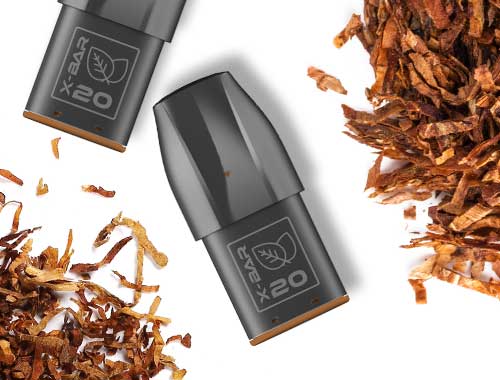
Tobacco liquids reproduce a range of profiles: light, dark, American blend, or richer versions combined with vanilla and caramel such as RY4. They are often the most comfortable starting point for a smoker who has just quit, because they do not disrupt the sensory habits built over years of smoking.
This family covers mint, menthol, chlorophyll and simply refreshing liquids. They suit former menthol smokers and stand out for a cooling sensation that masks part of the other flavours. The cooling effect is often welcome in summer and less so in winter.
Red berries, citrus, tropical fruit or orchard fruit: this is the widest and most popular family. Single-fruit liquids are easier to vape across a full day. Complex blends are enjoyable occasionally, but they saturate the palate faster.
Vanilla, caramel, biscuit, pastry, coffee or alcohol-free cocktails: these are the richest profiles. They are also the sweetest, which means they clog a coil the fastest. Plan for more frequent replacement if you use them daily.
| Family | Best suited to | What to watch |
|---|---|---|
| Tobacco | Smokers in the process of quitting, familiar reference points | Can taste dry during the first few days |
| Menthol and cooling | Former menthol smokers, summer use | Coolness masks the other flavours |
| Fruit | Everyday use, versatile profile | Complex blends become tiresome faster |
| Desserts and drinks | Occasional enjoyment | Clog coils noticeably faster |
Start with a profile close to your former habits. A light tobacco suits someone who smoked lighter cigarettes, a dark tobacco suits stronger tastes, and a menthol tobacco suits a former menthol smoker. This sensory continuity makes the transition easier and reduces the risk of relapse in the first few weeks.
It also helps to keep a backup flavour from another family. If the tobacco profile wears thin after a few days, having an immediate alternative stops you from being caught without an option.
An all-day liquid is one you can vape from morning to night without tiring of it. Contrary to expectation, it is almost never the most intense flavour. An all-day tends to be balanced, not too sweet, and discreet enough to fade into the background.
To identify one, start from what you actually enjoy eating and drinking rather than from current trends. Someone who likes black coffee will find a tobacco or a restrained dessert profile more natural than someone who prefers smoothies.
Many vapers rotate between two or three liquids: something restrained in the morning, a fruit profile in the afternoon, a dessert in the evening. This rotation limits palate fatigue and keeps each flavour enjoyable for longer.
Nicotine strength shapes both the throat sensation and the success of your transition. It is determined by your previous consumption, how often you vape and the type of device you use. There is no exact equivalence between a cigarette and a puff on an e-cigarette.
Look at how many cigarettes you smoked per day, how long you waited before the first one in the morning and when cravings appeared. These markers help you choose a sensible starting strength, which you can adjust afterwards.
Strengths commonly available in France are 3, 6, 10, 12, 16 and 20 mg/ml, with European regulations setting a ceiling of 20 mg/ml. Nicotine salts are most often sold at 10 and 20 mg/ml.
| Indicative profile | Strength often considered | What to watch |
|---|---|---|
| Occasional smoker | Low strength | Monitor how often you vape |
| Regular smoker (under a pack) | Medium strength | Factor in the power of your pod |
| Daily smoker (a pack or more) | Higher strength, within the 20 mg/ml limit | Favour nicotine salts on a low-power pod |
| Non-smoker | No nicotine liquid | Nicotine is addictive |
These profiles are not a substitute for personalised advice. A healthcare professional or smoking cessation specialist is best placed to support you.
Nicotine salts are absorbed faster and produce a gentler throat hit. They suit low-power pods and heavily dependent smokers, who recover a sensation close to a cigarette without excessive irritation.
Freebase nicotine gives a sharper hit and works better in versatile devices. It also makes gradual reduction easier to manage over time. Neither form is superior: the right choice depends on your hardware and your tolerance.
A strength that is too low leads you to take more and more puffs without ever feeling satisfied. A strength that is too high can cause nausea, headaches, dizziness or palpitations. If these symptoms appear, stop using the product. Seek medical advice if they persist.
Stay on the same strength for several days before changing any other variable. Altering the liquid, the power and the pod at the same time makes it impossible to identify what caused a problem.
The PG/VG ratio must match how your device is built. A compact pod is designed for a thin or balanced base. A base that is too thick in a low-power device wicks poorly and produces a burnt taste. Conversely, a very thin base in a tank designed for VG can encourage leaking.
| PG/VG ratio | Viscosity | Suitable hardware | Result in the mouth |
|---|---|---|---|
| 70/30 | Thin | Tight-draw MTL pods, coils above 1 ohm | Precise flavour, strong hit, little vapour |
| 50/50 | Medium | Versatile pods, coils between 0.8 and 1.2 ohm | Balance of flavour, hit and vapour |
| 30/70 | Thick | Sub-ohm devices, coils below 0.8 ohm | Softer and sweeter, heavy vapour production |
Before each refill, check three things: the coil resistance in ohms, the recommended wattage range and the ratio suggested by the manufacturer. These details are printed on the coil itself or on its packaging.
A 1.2 ohm coil is generally designed for a liquid containing no more than 50 % VG. Going beyond that reduces wicking and shortens the coil’s lifespan. PG/VG ratio and nicotine strength are two separate pieces of information, to be checked independently on the label.
Priming means saturating the cotton in a new coil before first use. Place a few drops of liquid directly onto the side openings and the visible cotton, fit the coil, fill the tank, then wait around ten minutes.
Without this step, the cotton heats dry and burns on the very first puff. This is known as a dry hit: a harsh, acrid taste that renders the coil permanently unusable. Insufficient priming is its most common cause.
After several weeks on the same liquid, you may stop perceiving its flavour altogether. This phenomenon, commonly called vaper’s tongue, is a saturation of the olfactory and gustatory receptors. It is not a product defect.
Alternating between two or three different profiles, drinking more water and taking a break of a few days is usually enough to restore your perception. If the loss of flavour comes with reduced vapour and gurgling, the cause is more likely a coil reaching the end of its life.
Some liquids, particularly desserts and complex tobacco blends, gain depth after a few days or weeks of rest. This maturation, known as steeping, takes place away from light and heat with the bottle closed. Fresh fruit profiles gain nothing from it and may even lose their brightness.
To compare two formulations, use a clean, compatible coil. A worn part changes the result and distorts your assessment. Note the nicotine strength, the PG/VG ratio, the wattage used and how long it takes before you tire of it.
For a first purchase, a simple formulation makes it easier to identify a poorly tolerated ingredient. Complex blends make that analysis harder if irritation occurs. If you experience any discomfort, stop using the liquid in question.
Store your bottles upright, away from light and heat, and always out of reach of children and pets. Avoid contact with skin and eyes. If a bottle leaks, clean the area immediately and wash your hands.
If you have just stopped smoking, a tobacco profile close to your former cigarettes is the safest choice. If the taste of tobacco now puts you off, a simple fruit or menthol profile is a good alternative. Avoid very complex blends in the first few weeks: they make it harder to identify a poorly tolerated ingredient.
There are three main causes. The coil is worn, which usually comes with less vapour and sometimes gurgling. Your taste buds are saturated from prolonged use of the same flavour. Or the liquid has been exposed to light or heat, which degrades the flavourings.
A 50/50 base is versatile for most pods. Even so, check the coil resistance and the manufacturer’s recommended wattage range before each refill. A coil above 1 ohm calls for a thinner base.
Technically yes, provided you mix ready-to-use liquids of the same nicotine strength and similar ratios. You do, however, lose traceability of the actual strength and clarity about the composition. Never add a substance the manufacturer did not intend into an e-liquid.
A best-before date appears on the bottle, generally one to two years after manufacture. A liquid whose colour has darkened noticeably, whose smell has changed or whose bottle is leaking should not be used.
No reliable conversion exists. The nicotine you inhale varies with the strength in mg/ml, the length of the inhalation, the power, the coil type and how often you vape. To monitor your consumption, measure the volume of liquid used over a given period and note its strength instead. This marker is imperfect, but it is more meaningful than a fixed equivalence.
Sale prohibited to minors. Product that may contain nicotine, an addictive substance. Use by non-smokers not recommended.